Remediator for Soil contaminated with Hydrocarbons
Every chemical or petroleum company’s biggest fear is soil polluted with hydrocarbons.
It is guaranteed to kill neighbouring plant life, and it has the potential to spread to nearby bodies of water. Furthermore, you may be subject to enormous fines from the EPA for land pollution.
Moreover, extracting hydrocarbons from the soil is typically a costly and time-consuming process. Physical excavation, aeration (which increases the danger of air pollution), and the use of thermal radiation to remove impurities are all options.
So, how do you cleanse soil in a safe and cost-effective manner?
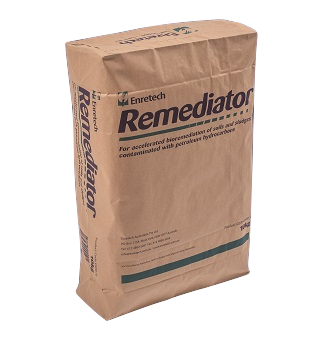
Oil-degrading, naturally occurring, and supplemental microorganisms have been charged with Remediator, a soil decontaminant (no genetic modification or bioengineering).
It includes all of the components required for microbial production and maintenance, which is critical for fast bioremediation. The bacteria quickly break down the hydrocarbon pollutants into their harmless elements when provided a hydrocarbon food supply and kept wet.
Features and Advantages
Acting quickly
The average reduction in hydrocarbon levels is 82 percent in 77 days, with up to 80 percent reduction in 30 days in some cases.
The environmentally friendly Remediator will not biodegrade until the encapsulated hydrocarbons have been bioremediated.
There will be no leaching.
Leaching is prevented by rapid encapsulation.
Simple to use and safe
Non-carcinogenic, non-toxic, and non-abrasive. There is no need for additional training, and crews are not required to be experts.
Made in a responsible manner
Produced from a renewable natural resource.
Application
The dry product is blended as evenly as possible with the polluted soil while applying the remediator. The contaminated hydrocarbon will be absorbed and encapsulated once it comes into touch with the Remediator (up to saturation level). Tilling is used to disseminate the product, and no washing or milling is required, as in other bacterial uses.
In-situ remediation is possible (up to a depth of.5 metres), but deeper pollution must be dug, mixed, and treated ex-situ (or replaced in-situ). For moisture retention, sludges should be properly mixed with a bulking agent. Before applying the product, make sure it’s completely dry. You may get a generic application protocol as well as a more thorough technical application protocol (for a crude oil spill) here. On request, detailed, site-specific application protocols are provided.
The Remediator may be used on direct spills since it is a safe, dual-purpose oil and gasoline absorbent as well as a bioremediation agent.
Because no two soil remediation situations are the same, the proper application techniques should be devised in collaboration with Enretech specialists.
The Remediator procedure has been actively utilised in Australia and globally over the past 14 years, and it has been independently confirmed by universities or research organisations in Canada, the United States, the United Kingdom, Japan, and South Africa.
| ENR010 | ENR011 | |
|---|---|---|
| Size | 10kg bag | 20L pail |
| Pallet quantity | 72 per pallet | 48 per pallet |
| Bag dimensions | 36cm x 12cm x 52 cm | 30cm x 30cm x 41cm |